Appreciating God’s Greatness Everyday
We are in a series called How Great Is Our God? It’s been my conviction that as we come to know the greatness of our God more deeply, our faith goes stronger and stronger.
The best way to grasp the greatness of God is through a deep soaking in scripture. We need to learn to know how God reveals Himself in Christ directly…and there are plenty of passages that directly tell us of Christ’s wise plan and redemptive purpose. There are also many passages that tell us about the great roles He takes on for us as His people. Some Christians learn these things in regular Bible study and say, “This is good and spiritually nourishing, but I wonder if there is something more.” There is.
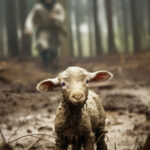
It’s typology. In his book Everyday Glory, Gerald McDermott says, “Typology seems to be God’s preferred way to communicate.” (page 22) The Bible is full of picture language which presents truths about God which also prophesies truth about his future relationship with His people. So the burning bush that burns on and on but does not burn up teaches us that an eternal, Holy God can dwell with fallible, sinful people without consuming them. But that’s not all. “The burning bush that was not consumed was a visible type of Israel’s preservation in the fires of affliction in Egypt” and in exile. Likewise, Moses’s rod, which swallowed up the Egyptian magician’s rods typified the superiority of YHWH’s power over the power of all other gods.” (page 23) When we begin to read the Bible looking for types then we see God’s greatness in deeper ways. Jesus is the Lamb of God. That image communicates much the same truth as the statement, “Jesus is gentle.” But the picture of Jesus as a sacrificial lamb packs an emotional punch that is deeper than that statement. Learning the Bible’s typology helps us appreciate His greatness more.
But typology isn’t just found in Scripture. It’s also found in the world around us. Jesus compared his love for Jerusalem to the love of a mother hen for her chicks. (Mt 23:3). Jeremiah observed that storks know when to begin their migrations (Jeremiah 8:6-7) but Judah did not know how to repent of his evil. Unlike Judah, the stork faithfully follows the pattern God gave it. These pictures reveal that we can learn about God and our relationship to Him from the birds.
I love how the shearwater finds its way back to its birthplace even after five years. Marine biologists call this remarkable ability of the animal kingdom natal philopatry. Our Creator placed this knowledge of home deep within the shearwater. It turns out that just before it fledges the shearwater leaves its burrow and looks at the constellations and imprints the exact geographical location of its home. This stays with the shearwater for the next 3-5 years of travel around the globe. When it is ready to raise its own family, it recalls the old mental map and goes straight home. We pray that the God who designed the shearwater with such a strong homing instinct might imprint a powerful longing for spiritual home upon our kids. The Bible reminds us, “You have a dwelling place for all generations, Lord.” (Psalm 90:1)
Every bird, every animal reveals the Creator. God’s everyday greatness is all around us. Sometimes we just need to explore it from a new perspective.